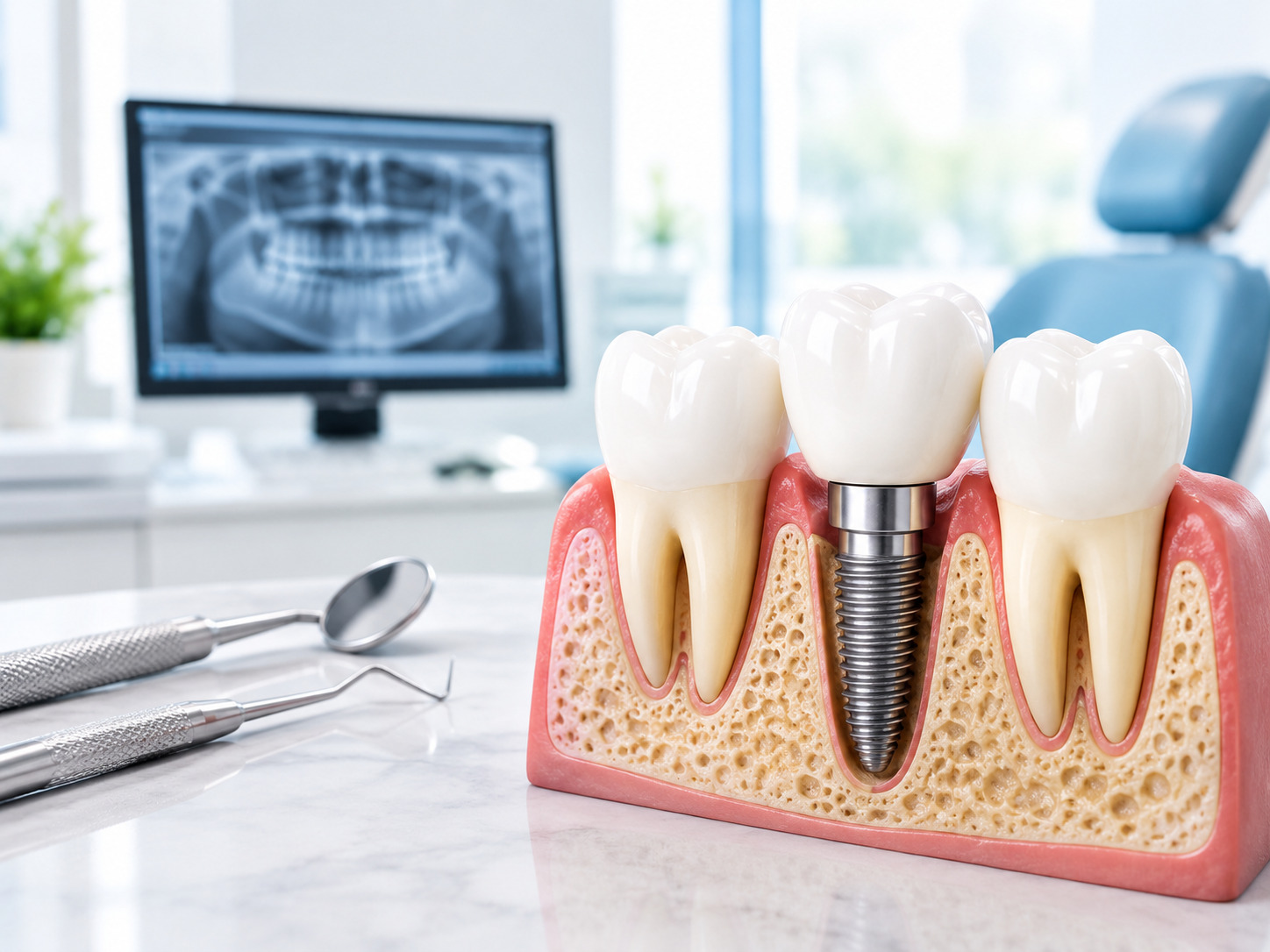
Losing a tooth can affect much more than your smile. It can make chewing uncomfortable, change the way nearby teeth fit together, and gradually affect your confidence while speaking or smiling in public.
For people considering dental implants in Viman Nagar, understanding the treatment before making a decision is important. Dental implants are designed to replace missing teeth with a stable, long-term restoration that looks and functions naturally — but they are not automatically the right choice for everyone.
What Are Dental Implants?
A dental implant is a small artificial tooth root — typically made of biocompatible titanium — that is placed into the jawbone. After the implant heals and integrates with the surrounding bone through a process called osseointegration, a dental crown or other restoration is attached to it.
Unlike a removable denture, an implant-supported tooth is fixed in position. This makes everyday activities such as eating and speaking significantly more comfortable and natural.
Dental implants may be considered for:
- A single missing tooth
- Multiple missing teeth
- Several damaged or failing teeth
- Full-mouth tooth replacement
- Implant-supported dentures
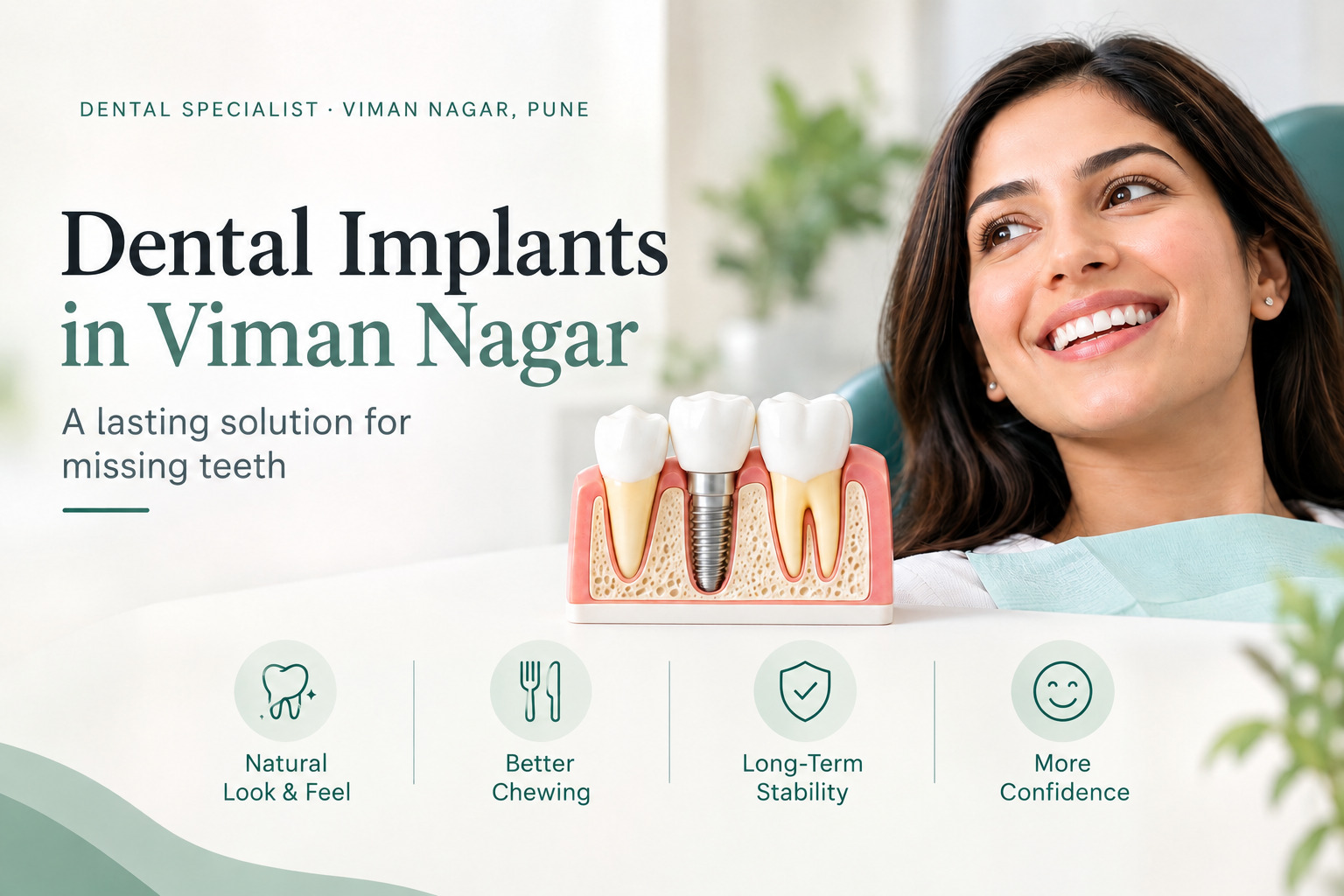
Missing teeth affect function, bite alignment, and jaw bone density over time.
Why People Choose Dental Implants in Viman Nagar
A missing tooth creates a domino effect that many patients underestimate. Common concerns include:
- Difficulty chewing certain foods comfortably
- Food getting trapped around the gap
- Neighbouring teeth drifting into the empty space
- Progressive jawbone loss at the site of the missing tooth
- Changes in bite alignment
- Reduced confidence while smiling or speaking
Not everyone experiences the same problems after tooth loss. A proper dental examination is therefore essential before deciding on any replacement option — not every patient needs an implant, and not every patient is immediately ready for one.
How Implant Treatment Is Planned
The missing-tooth area, surrounding teeth, gum condition, bite, and general oral health are evaluated in detail.
The jawbone needs to provide suitable support. Digital imaging is used to assess bone density and surrounding structures precisely.
The dentist explains available options — implant, bridge, denture, or a combination — based on your specific situation.
The titanium implant is placed into the jawbone under local anaesthesia. Most patients find the procedure very manageable.
Over 6–12 weeks the implant fuses with the jawbone — osseointegration. You are not visiting the clinic during this phase.
A custom-made porcelain crown is fitted — matched to your surrounding teeth in shade, shape, and bite.
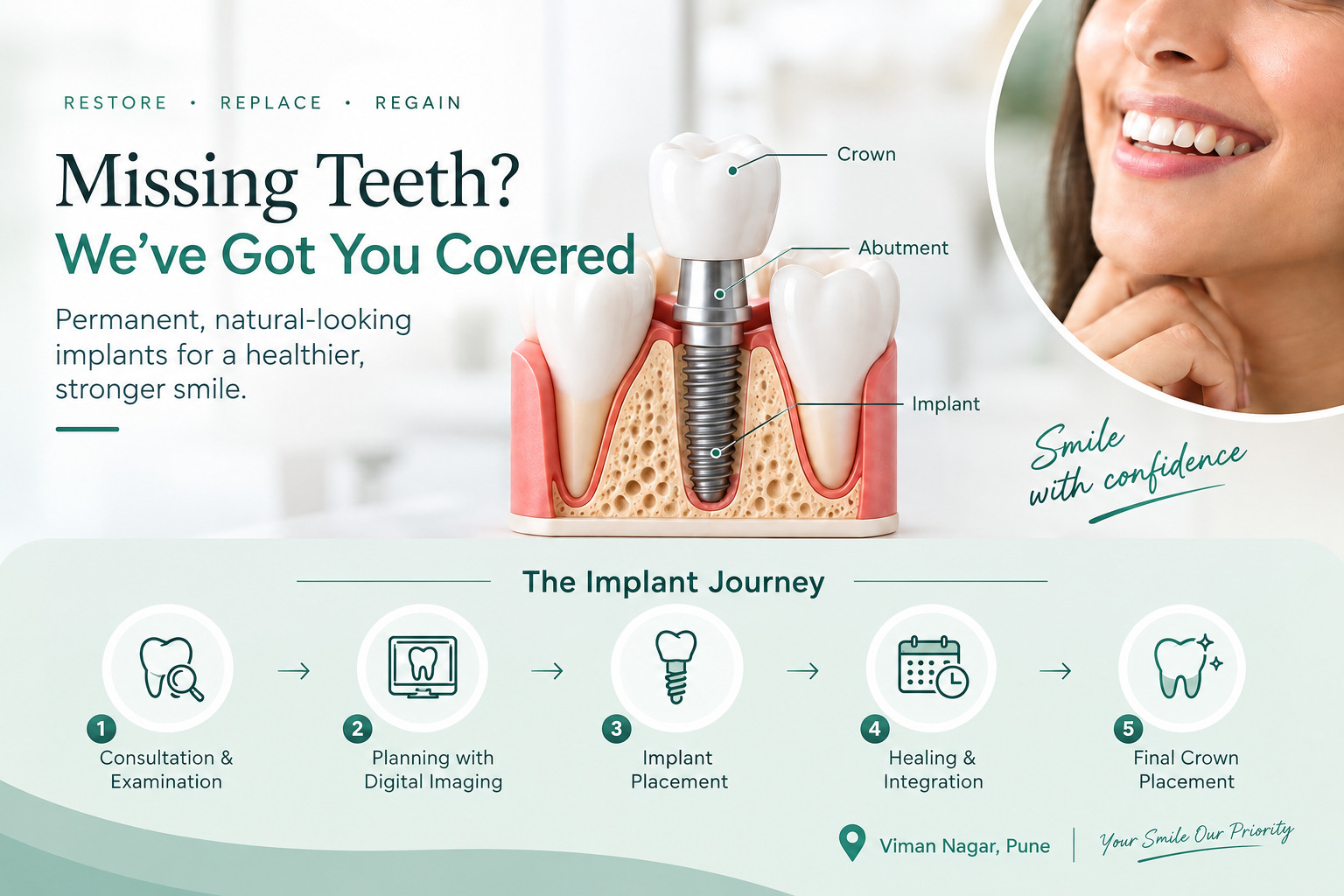
Proper aftercare and regular check-ups are essential for long-term implant success.
Implants vs Alternatives: How Do They Compare?
How Much Do Dental Implants Cost in Viman Nagar?
The dental implant cost in Viman Nagar varies considerably because every patient's requirements are different. Comparing clinics only on the basis of an advertised price can be misleading — two patients may require completely different treatment plans even when both have a single missing tooth.
Factors that affect the final cost include:
- Number of implants required
- Type and brand of implant
- Crown material selected
- Bone density and whether grafting is needed
- Gum health and any preparatory treatment required
- Complexity of the case overall
At Dr. Ishita's clinic, a clear cost estimate is provided after your initial consultation — no hidden charges, and EMI options are available for major treatments.
Do Dental Implants Feel Like Natural Teeth?
A properly planned implant restoration is designed to provide a stable, functional replacement for a missing tooth. Once healing is complete and the patient becomes accustomed to the restoration, it integrates naturally into everyday activities such as eating and speaking.
However, an implant is not biologically identical to a natural tooth — it still requires regular cleaning, good oral hygiene, and professional dental check-ups. With proper maintenance, implants can last 20 to 30 years or longer.
Who May Need Full-Mouth Dental Rehabilitation?
For patients who have lost several teeth or have multiple severely damaged teeth, a comprehensive rehabilitation plan may be more appropriate than individual implants alone. A full-mouth approach considers the condition of all teeth, gums, jaw, bite, and overall oral function as an interconnected system.
Frequently Asked Questions
Ready to explore your implant options?
Book a free assessment with Dr. Ishita Jakhanwal in Viman Nagar. We'll evaluate your case, answer every question, and give you a clear picture of your options and costs — with zero pressure.
💬 WhatsApp for a Free Implant Assessment